
Treating Pests Without Broadcast Spraying
Tree Trunk Injections in El Paso for targeted pest control and nutrient delivery into the vascular system
Aphids colonizing a cottonwood canopy or borers tunneling through ash bark don't respond to surface treatments once they're inside the tree. Tree trunk injections deliver pesticides, fungicides, or nutrients directly into the vascular system, where active ingredients move through xylem and phloem to reach foliage, cambium, and roots. TLC Unlimited uses injection treatments for property owners in El Paso dealing with systemic pest infestations, nutrient deficiencies that foliar sprays can't correct, or disease patterns requiring internal distribution of fungicides.
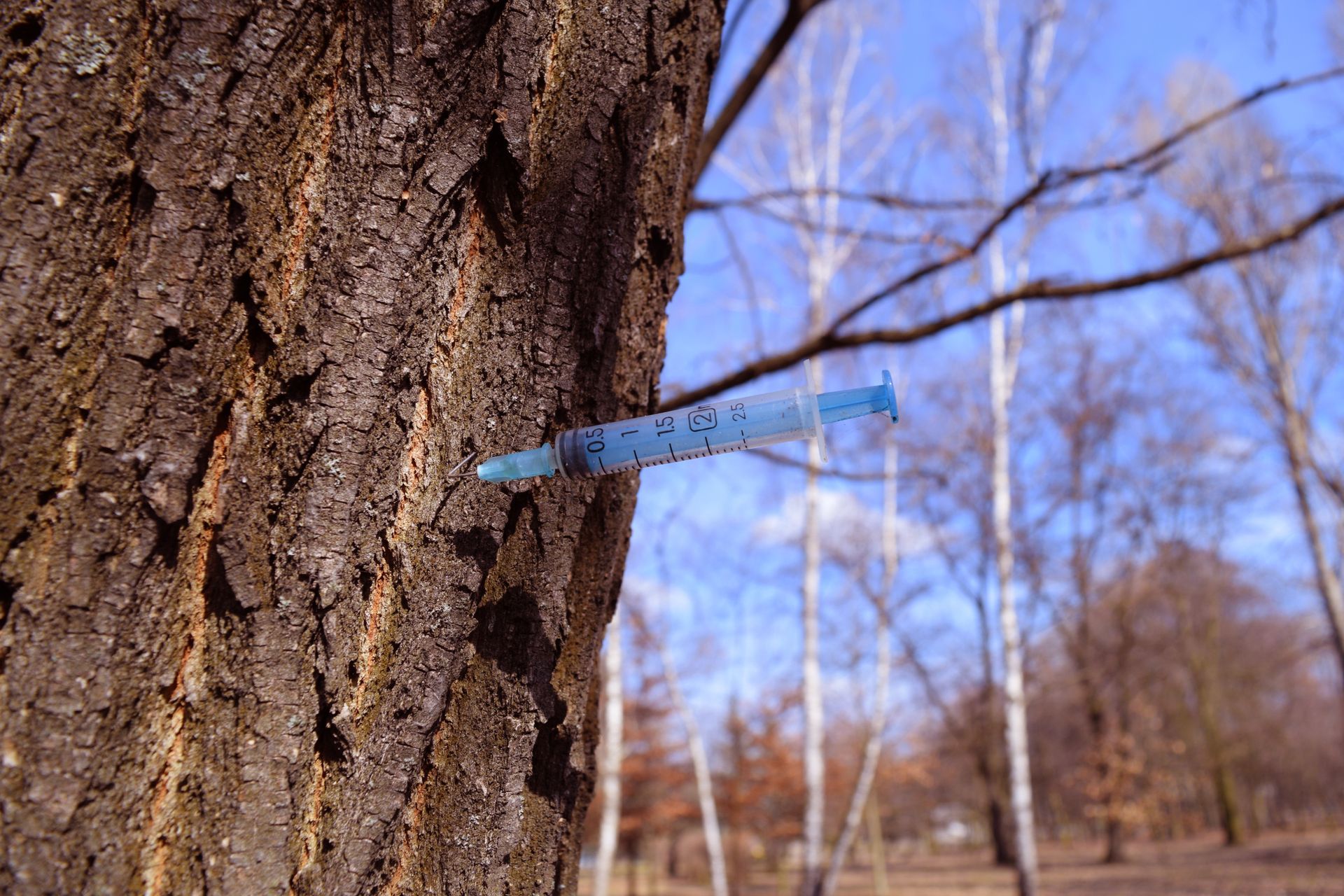
Injection involves drilling small entry points into the trunk at intervals around the circumference, inserting treatment capsules or ports, and allowing the tree's natural uptake to distribute the solution throughout its structure. This method confines active ingredients within the tree, avoiding drift onto surrounding plants, soil contamination, or exposure to pollinators and beneficial insects.
Schedule a tree health assessment to determine whether injection treatment is appropriate for the pest, disease, or deficiency affecting your landscape.
Why Internal Delivery Works for Specific Problems
Systemic treatments travel through the tree's circulatory system, reaching insects feeding on sap, pathogens growing in cambium tissue, and foliage where nutrient deficiencies cause chlorosis. Injection timing aligns with active growth periods when vascular flow is strongest, ensuring distribution to all parts of the canopy. Treatment plans are customized based on tree species, pest life cycle, and whether the goal is eradication, prevention, or nutrient correction.
After injection, you'll notice reduced pest activity as insects feeding on treated tissue die off, improved foliage color as nutrients reach deficient leaves, or halted disease progression as fungicides circulate through infected areas. Effects develop over weeks as the solution distributes, with protection lasting months depending on the active ingredient and application rate.
Environmentally safe application methods prevent runoff into surrounding soil, eliminate airborne drift that affects nearby plants, and reduce non-target exposure compared to broadcast spraying. Injection ports seal naturally as the tree compartmentalizes the entry wound, leaving minimal long-term impact on bark integrity.
Questions Before Starting Your Project
Trunk injection raises questions about application methods, timing, and how treatments compare to traditional spraying.
What pests are effectively controlled through trunk injection?
Borers, aphids, scale insects, and other sap-feeding or cambium-dwelling pests that contact treated tissue as they feed respond well to systemic insecticides delivered through injection.
How long does injected treatment remain effective?
Protection typically lasts one to two growing seasons depending on the product, tree size, and pest pressure, with reapplication needed as active ingredients break down or flush from the system.
When should nutrient injections be administered?
Applications during active growth periods in spring or early summer allow maximum uptake and distribution, correcting deficiencies when trees are actively producing foliage and new wood.
Why choose injection over foliar spray for nutrient deficiencies?
Injection bypasses alkaline soil that binds nutrients like iron, delivering them directly into the vascular system where they reach chlorophyll production sites in leaves without soil interaction.
How many injection points does a tree require?
Entry points are spaced based on trunk diameter, with larger trees requiring more ports to ensure even distribution throughout the canopy and root system.
TLC Unlimited evaluates pest activity, disease symptoms, and nutrient deficiencies to determine whether trunk injection offers the most effective solution. Arrange a consultation to discuss treatment options tailored to your tree species and the specific issue requiring intervention.